


The Hidden Germ Reservoirs in Modern Offices
In enclosed commercial spaces with centralized air distribution, dozens or hundreds of employees share communal hardware daily. While facility attention often focuses on general floor mopping or washroom bowls, microbiological studies consistently show that the highest bacterial concentrations exist on frequently handled, rarely sanitized surfaces known as “High-Touch Points.”
Key high-touch zones that harbor microbial buildup include:
- Shared Office Technology: Photocopier touchscreens, boardroom microphones, projector remotes, and shared workstation peripherals.
- Access Portals: Entrance door pull handles, glass partition push bars, and lighting switches.
- Pantry Hotspots: Microwave control panels, refrigerator handles, water dispenser buttons, and sink mixer taps.
Clean First, Then Disinfect: The Two-Step Rule
A common procedural mistake in corporate offices is spraying disinfectant directly over unwashed surfaces. When sebum, food residue, or dust covers a surface, the organic soil forms a barrier that shields underlying pathogens from the active disinfecting chemical.
Professional hygiene protocols mandate a two-step sequence:
- Step 1: Surface Cleaning (Decontamination) Wipe down surfaces with a neutral detergent and color-coded microfiber cloths to physically remove grease, dust, and organic matter, exposing the bare surface.
- Step 2: Hospital-Grade Disinfection (Pathogen Eradication) Apply broad-spectrum disinfectants (such as quaternary ammonium compounds or chlorine dioxide formulations certified to kill 99.9% of bacteria and viruses). Crucially, the chemical must remain wet on the surface for the required Dwell Time (contact time) specified by the manufacturer to achieve complete pathogen kill rates.
Structuring a Long-Term Commercial Sanitation Protocol
To maintain a safe workplace, commercial cleaning plans should combine daily maintenance with periodic deep sanitation:
- Daily Routine Janitorial: Wipe and sanitize all designated high-touch points at least twice per working day.
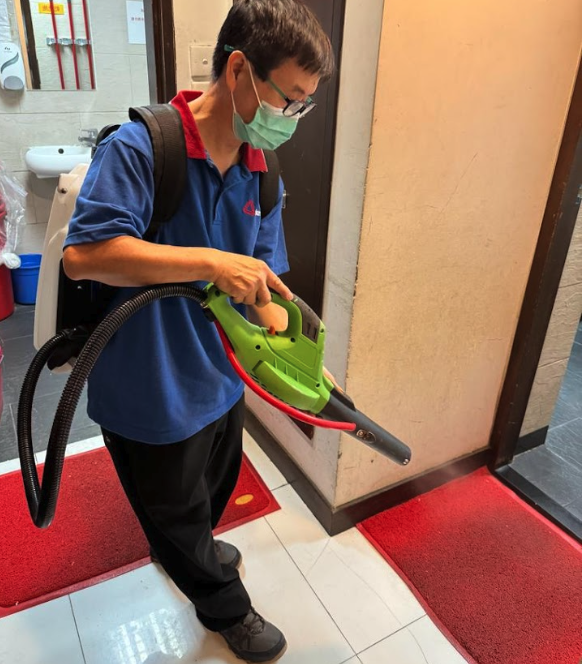
- Periodic Deep Misting: Deploy monthly Ultra-Low Volume (ULV) cold fogging to disperse micro-droplets of disinfectant into hard-to-reach recesses and air spaces without wetting sensitive electronics.
A structured hygiene routine lowers workplace cross-infection, mitigates sick leave, and demonstrates active care for employee well-being. Sunfat Cleaning provides customized commercial janitorial contracts and deep disinfection solutions for businesses throughout Hong Kong. Contact our team to design your corporate hygiene plan.